The Scorpio lunar eclipse is a powerful event that can bring intense energy and transformation. Eclipses are known to be periods of change and new beginnings, and the Scorpio lunar eclipse is no exception.
In astrology, Scorpio is associated with deep emotions, transformation, and regeneration. When the full moon is in Scorpio during an eclipse, this can intensify these energies and bring them to the surface. This can be a time of releasing old patterns, beliefs, and emotions, and embracing a new phase in your life.
While lunar eclipses can be intense, they can also be positive. This is because they bring the opportunity for growth and change. By releasing what no longer serves you, you create space for new opportunities and experiences. You may also gain clarity and insight into what you truly want in life.
To work with the energy of the Scorpio lunar eclipse, here are some qualities you can tap into:
Honesty and authenticity: Scorpio energy encourages you to be honest with yourself and others. Use this time to speak your truth and let go of any facades or masks you may be wearing.
Inner reflection and self-awareness: Take time to reflect on your emotions and inner world. Use journaling, meditation, or therapy to gain insight into your patterns and beliefs.
Transformation and renewal: Embrace change and transformation. Use this time to let go of old patterns and embrace a new phase in your life.
Intuition and psychic abilities: Scorpio energy is associated with intuition and psychic abilities. Trust your gut instincts and pay attention to your dreams and inner guidance.
Courage and strength: Scorpio energy can bring up intense emotions and challenges. Use your inner strength and courage to face these challenges and overcome them.
Remember, lunar eclipses can be a powerful time for growth and transformation. Embrace the energies of the Scorpio lunar eclipse, and use this time to let go of what no longer serves you and embrace a new phase in your life.
Going through a breakup can be a difficult and painful experience, but there are several ways to manage it and make the process less overwhelming. Here are some tips that can help:
Allow yourself to grieve: It’s important to acknowledge your emotions and give yourself time to grieve the end of the relationship. Don’t try to suppress your feelings, as this can prolong the healing process. Instead, allow yourself to feel and process your emotions.
Take care of yourself: Self-care is essential during this time. Make sure you are getting enough sleep, eating well, exercising, and taking care of your mental health. You may also want to try activities that help you relax, such as meditation, yoga, or taking a hot bath.
Seek support: Lean on your friends and family for emotional support. Talking to someone about how you feel can help you process your emotions and feel less alone. You may also want to consider seeking professional help, such as therapy or counseling.
Cut off contact: It’s important to give yourself space from your ex-partner to help you heal. Avoid contacting them, unfollow them on social media, and remove any reminders of them from your daily life.
Focus on the future: While it’s important to process your emotions, it’s also important to focus on the future. Set new goals for yourself, try new hobbies, or focus on your career. Doing things that make you feel good about yourself can help you move on from the breakup.
Remember, managing a breakup is a process, and it’s okay to take things one day at a time. Be kind to yourself and give yourself the time and space you need to heal.
There are several dark divine feminine archetypes that appear in various mythologies and spiritual traditions. Some of the most well-known include:
Kali – a Hindu goddess who is associated with death, destruction, and transformation. She is often depicted with multiple arms, carrying weapons and severed heads, and is said to represent the power of time and change.
Lilith – a figure from Jewish folklore who is associated with sexuality, independence, and rebellion. She is often depicted as a demonic figure, and has been interpreted as a symbol of women’s empowerment and liberation.
Hecate – a Greek goddess who is associated with witchcraft, magic, and the underworld. She is often depicted with torches, keys, and serpents, and is said to represent the power of transformation and the mysteries of the unconscious.
The Morrigan – a Celtic goddess who is associated with battle, death, and sovereignty. She is often depicted as a triple goddess, and is said to represent the power of transformation and the cycle of life, death, and rebirth.
These archetypes teach us to embrace the darker, more mysterious aspects of life, and to find strength and wisdom in times of chaos and transformation. They remind us that death and destruction are natural and necessary parts of the cycle of life, and that by embracing these forces, we can tap into a deeper sense of power and purpose.
The myth of the dark divine feminine varies depending on the archetype in question, but in general, these myths involve themes of transformation, rebirth, and the power of the unconscious. They often feature powerful female figures who challenge the patriarchal order and assert their own independence and agency, sometimes at great cost. Through these myths, we can learn to embrace our own power and agency, and to recognize the value of our own darkness and complexity.
Starting a feminine spiritual practice can be a deeply personal and enriching journey. Here are some steps that may help you begin:
Educate yourself: It can be helpful to learn about different spiritual traditions that celebrate the feminine. Some examples include Wicca, Goddess worship, and Tantra. Read books, watch videos, and explore different online resources to get a better understanding of what these practices involve.
Find a community: Connecting with like-minded individuals who share your spiritual interests can be a supportive way to start your practice. Look for local groups or online communities that focus on feminine spirituality.
Explore your intuition: Feminine spirituality often emphasizes intuition, so taking time to listen to your inner voice can be a powerful way to deepen your practice. This might involve practices like meditation, journaling, or spending time in nature.
Connect with the divine feminine: Different spiritual traditions have different ways of connecting with the divine feminine. You might choose to meditate on a particular goddess, create an altar to honor the divine feminine, or incorporate rituals into your daily life.
Experiment with different practices: As you begin your journey, be open to exploring different practices and finding what works best for you. Remember that spirituality is a personal journey, and there is no one “right” way to practice.
Above all, approach your spiritual practice with an open heart and a willingness to learn and grow. Trust in your intuition and allow yourself to be guided by the wisdom of the divine feminine.
The concept of “dark feminine energy” refers to the aspects of the divine feminine that are associated with mystery, transformation, and the depths of the unconscious. This archetype is often represented by goddesses such as Kali, Lilith, Hecate, and the Morrigan, among others.
To awaken and connect with the dark feminine, one can start by exploring their own inner darkness and shadow aspects. This can involve practices such as journaling, meditation, dreamwork, and creative expression. It may also involve working with the symbols and imagery of dark feminine goddesses, and exploring the myths and stories associated with them.
Connecting with the dark feminine can help women to embrace their own power, creativity, and sexuality, and to transform aspects of themselves that may be holding them back. It can also help women to connect with a deeper sense of purpose and meaning, and to develop a more holistic and integrated sense of self.
It’s important to note that the “dark feminine” is not necessarily a force that is separate from or opposed to the “light feminine.” Rather, these are two aspects of a larger, more complex archetype that encompasses both light and dark. By embracing the dark feminine, women can tap into a deeper sense of wholeness and balance, and cultivate a more authentic and empowered sense of self.
The feminine spiritual path is a term that refers to a spiritual practice that embraces the divine feminine, or the feminine aspect of the divine. It is a path that values intuition, emotional awareness, connection to the earth, and the interdependence of all living things. This path often emphasizes the importance of community, relationships, and the healing of the collective wounds of patriarchy.
The feminine spiritual path can enlighten you by helping you to cultivate a deeper sense of connection to yourself, to others, and to the world around you. Through practices such as meditation, ritual, and creative expression, you can learn to access the wisdom of your intuition, to connect with your emotions in a healthy and authentic way, and to find meaning and purpose in your life.
It is important for women to have a spiritual practice because it can help them to connect with their own power and agency, to heal from the wounds of patriarchy, and to cultivate a sense of wholeness and balance in their lives. Women have historically been excluded from many spiritual traditions, and the feminine spiritual path offers a way for women to reclaim their spiritual heritage and to find their own unique path of connection to the divine.
Additionally, a spiritual practice can help women to navigate the challenges and complexities of daily life, to find a sense of meaning and purpose in their work and relationships, and to connect with a larger sense of community and purpose. Ultimately, a spiritual practice can help women to cultivate a deeper sense of inner peace, joy, and fulfillment, and to make a positive impact on the world around them.
Click here to learn ways to start your feminine spiritual journey.
I was first introduced to the concept of a Great Work from my Christian upbringing from the bible scripture John 14:12. According to John, greater works can only be applied through the Christian savior, Jesus. This concept of great works implies becoming Christ-like, performing miracles and sacrificing yourself for the sake of others. While it may seem noble, I will not be exploring that concept, more so, I will refer to the “Great Work” as described in Hermeticism. Our Great Work is fueled by our desires and is the vehicle for transmutation. As I have taken time to explore and claim my Great Work, I have learned that accepting the process of development makes wielding my Great Work with more ease. This means you will not get there overnight! Nor is reading a few books, attending a few courses or classes, or even taking a three-month sabbatical on a Buddhist mountain top! While your Great Work may lead you down those paths; the point is, this is a lifelong journey and process that will be full of ups, downs, disappointments, successes, joy, and failure- heavy on failure because that is where you truly find the answers and your way.
A close friend of mine stated that we are already in our Great Work, however, because we are so deeply invested in our experience that we tend to miss it or overlook how we are in flow of our Works. That is when I began to shift my perspective and take audit of my life experiences up to that point. And we truly are in our Great Work everyday, even in the mundane day to day experiences. These moments create the vast picture of what our purpose are.
If you are feeling stumped, or unsure what your purpose is, then I encourage you to review your life objectively. Sit quietly with yourself and write out what experiences you have had, pleasurable and unpleasurable, what failures and successes, and what mundane things you like to do and not do. While in this quiet space, refrain from judging any parts of yourself while you are allowing yourself to become curious. It is in these moments that your most profound messages and revelations shall come to you.
You may need to do this as a continued practice, and if so, encourage you to take 10-15 minutes a day for the next week to see what you will discover. Claiming and owning your Great Work is a process, and all great things develop with time and refinement. Have patience and extend grace to yourself. Greatness is calling!
I shared this post for #BlackHistoryMonth in a Goddess group I’m in. For context, the group is predominantly non-women of color, so when asked I was flattered to write up a personal story. And in writing, I became nervous and old triggers flared up. No one in the group made me feel uncomfortable, and the request was in no way tone deaf. Regardless, the offering came about beautifully and the assignment was well understood. So, here I am re-sharing in honor of #WomensHistoryMonth Thank you 🙏🏽
I am honored that I was asked to share an offering for Black Her-Story Month #BlackHistoryMonth As I did volunteered for a topic I must say its been triggering and brought me deeper into self reflection, nevertheless, I must trigger through. 💙✨💙
I will be sharing from my personal experiences, and welcome it as a portion of the collective experience of the witch wound among Black Afro indigenous women. Many of us sisters have experience this and there is quite nuances in all our experiences, particularly as it shows or plays out among Black Afro indigenous women. I don’t want to stand as a representation for all black women or Black American women however, I do believe there are intersections in what I will offer. I’ll share my experience as I am triggering through and healing the witch wound.
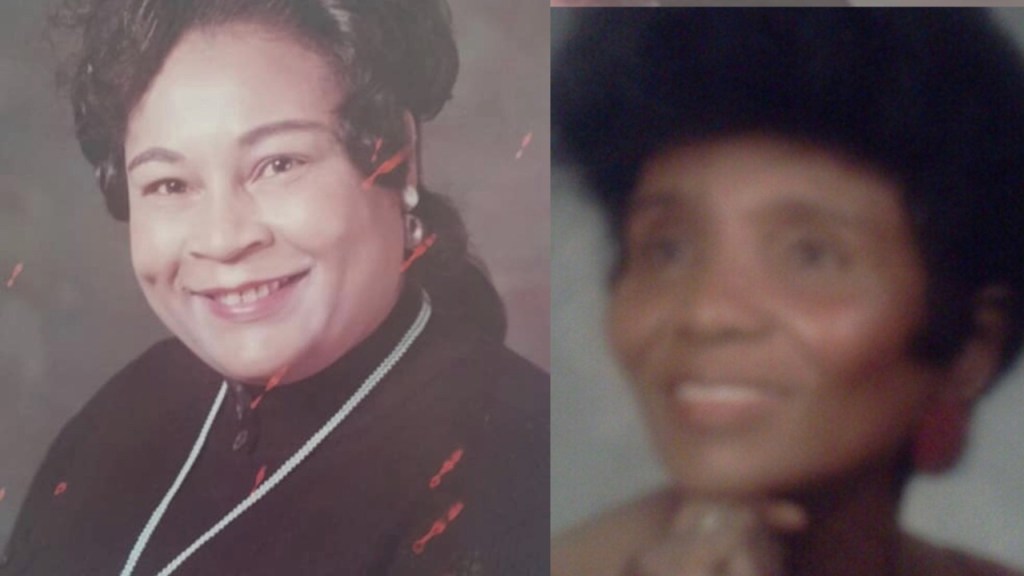
I grew up in a very Christian southern military home that was quite patriarchal; However, I can remember my late paternal great grandmother being very knowledgeable of roots, herbs, and cultivating tinctures. She was of Cherokee Nation (Chicora Indian) and Angola descendent by way of the slave trade, who grew up on the Gullah Islands of South Carolina and Florida. Although she was very much a Christian, a preachers wife, and a high society social lite, there was this quiet mystical aura about her. Now these old folks would never call themself magical, let alone a witch, for that would be blasphemous, however, they would say in the whispers of night that she was a “root Woman”.
Even as I reflect on my late maternal great grandmother who was very much connected to her native American indigenous heritage too, she was very much a Christian, as well as a minister’s wife. She was a highly skilled gardener and cook, she could heal just about anything with a tea, cake, or a stew. She was from Louisiana. I can remember from both my parents, detesting the workings of both my great grandmothers, never in a disrespectful manner, but in a fearful manner as if they were doing something wrong or evil. Nevertheless, they and many others would still with seek her out for help for any ailments both physical and metaphysical. Their work Was detested yet necessary.
So fast forward to myself when I began my awakening shortly after 2012, I became more interested in learning the history of both my great grandmothers. I was quite intrigued by what they understood and what they had knowledge of despite my parents and other family members whispers of disapproval. Just like my great grandmothers, I too suffered disapproval, but more so publicly for my exiting of the Christian church. It was a very lonely in dark time for me during my awakening however what I was able to gain was a deeper understanding and connection with both my blood lines I was able to reconcile the missing Link as to what my great grandmothers could not do openly, could not say openly, could not live openly.
I honor these women and every women before them Who were not able to live and be wild and free. Who were bounded to social, racial, and Misogynoir norms that limited their expansion.
I honor every single witchy woman, mystics, obeah woman, root worker, spirit cooker, Oracle seer and Priestess along her path for isolation is also protection.
Now as I am growing comfortable with outing myself, I personally struggle with my knowings and not knowing how I know. I am working through embracing that I belong here. That I too am Daughter of The Mother, they I too am seen. That I too belong. That I too am powerful and I too can be free. For I was and will always be Free.
And That Not just “I too” but I“AM”. So when I reflect on the collective of Black Afro Indigenous women, I feel the collective grief, hurt, shame, and fear- mainly fear of remembering the WHO WHAT WHERE WHEN AND WHY- and the ANGER, rage that comes with the cycle and process healing grief and anguish. The fear of remembering what was lost, forgotten, and stolen. The remembrance of how the first became last and forgotten.
Until then, like myself once did, we may hide behind and try to find a solace or a buffer in religion, men, children, careers, food etc.. anything that would attempt to ease the memories of death, destruction, power and creation.
But there is a light of reconciliation within the mother and her daughter. All progressions fulfills it’s Cycle; the pendulum swings, the wheel turns, the double Dutch ropes rounds about and When she is ready to fully embrace All of her being, May Her Crown of Glory reawakens All the Hearts of The Daughters to be fully embraced; for there is no exclusion in the arms of The Mother, in the Joy of the Maiden, and eyes of The Crone.
Dedicate this post to my late Great-Grandmothers Alice “Lottie” McAllister and Margaret Jessie May Johnson
What is Imbolc? In modern times, it’s honored by Wiccan and pagan celebration that has also been known as Candelmas. Imbolc symbolizes the halfway or midpoint, or bridge point between the Winter Solstice (Yule tide) and Spring Equinox (Ostara). In modern times, it is revered between January 31 – February 3. In the year 2022 it will fall on the astrological alignment of the Sun in sign Aquarius, a new Moon in Aquarius, and the Lunar Chinese New Year. 🐅
Imbolc is believed to have originated from Proto-Indo-European cultures, and is loosely translated to mean “to milk” and “to wipe clean”. As cultures and people traveled further into what we know as Europe, the practice and name of Imbolc was adopted by old Irish Celtic word meaning “pregnant” or “in the belly”. This was to reflect the pre-seasonal change of seedlings beginning to “stir” in Mother Earth to sprout or be birthed in the Spring. This holiday celebrated Brigid, the Celtic fire and fertility Goddess. Over the centuries, Brigid was adopted by Christianity as St. Brigid.
Black Woman and Imbolc
As “black” indigenous people of the African Diaspora, it is vital for our mental and spiritual liberation to reconnect with our spiritual natural order. Imbolc is a “religious” rite of honoring Black Womanhood by our ancient matriarchs and fathers. This was and is the sacred feast honoring the transitional stages of a girlhood or Maidenhood entering the enlightenment of womanhood, or motherhood. This holy feast day honored the transition and wisdom of each biological phase, spiritual responsibility, and divinity of the female human form.
The ancient Celtic practice of Imbolc celebrated Brigid, the Celtic maiden goddess in the form of the sun. Legend and myth stated that she would spread her green cloak across the land, releasing it from the icy grips of winter. Her feast day represents the midpoint of winter to spring., and honored with bonfires, blazing hearths, lit candles and foods that symbolize the the Sun.
This was a high time for magic, for ritually burning off and releasing the old year and nourishing the new.
We can honor this high holy day today by placing a woven or weaved cross on our doors. The weaving and the cross symbolizes the bridge between dark and light of our journey. You may light a candle and sit in silence to honor your personal life journey, every high and low that has led you to this point. You may even journal gratitude for your experiences and wisdom gained while sitting near a bonfire of fireplace.
To learn more about Brigid, Oracles, and Her-Story click here!



 Feminine Alchemy Network